MNTA is an experiential brand and digital platform that brings mountain environments to people who may not be able to access them physically because of disability, chronic illness, caregiving, location, or circumstance.
The project is not a hiking app or outdoor lifestyle brand. It is designed as a slow, cinematic environment where users can move through a mountain, learn its weather and ecology, listen to its soundscape, and send a piece of that place to someone else.
The MNTA identity is based on the geometry of mountains: planes of light, shadow, weather, and horizon. The wordmark abstracts that structure into a faceted peak system, while the visual language stays quiet, spacious, and restrained.
The palette is built from dusk, stone, shadow, ice, parchment, and a single warm horizon accent. Most of the system remains cool and atmospheric so moments of warmth feel intentional.
The palette comes from one specific evening: a long ridge line, the last bit of light dropping behind it. Deep blues, mountain shadow, stone, and one warm strip at the horizon. Parchment holds the type. The system stays mostly monochromatic on purpose, so when warmth shows up, it has weight.
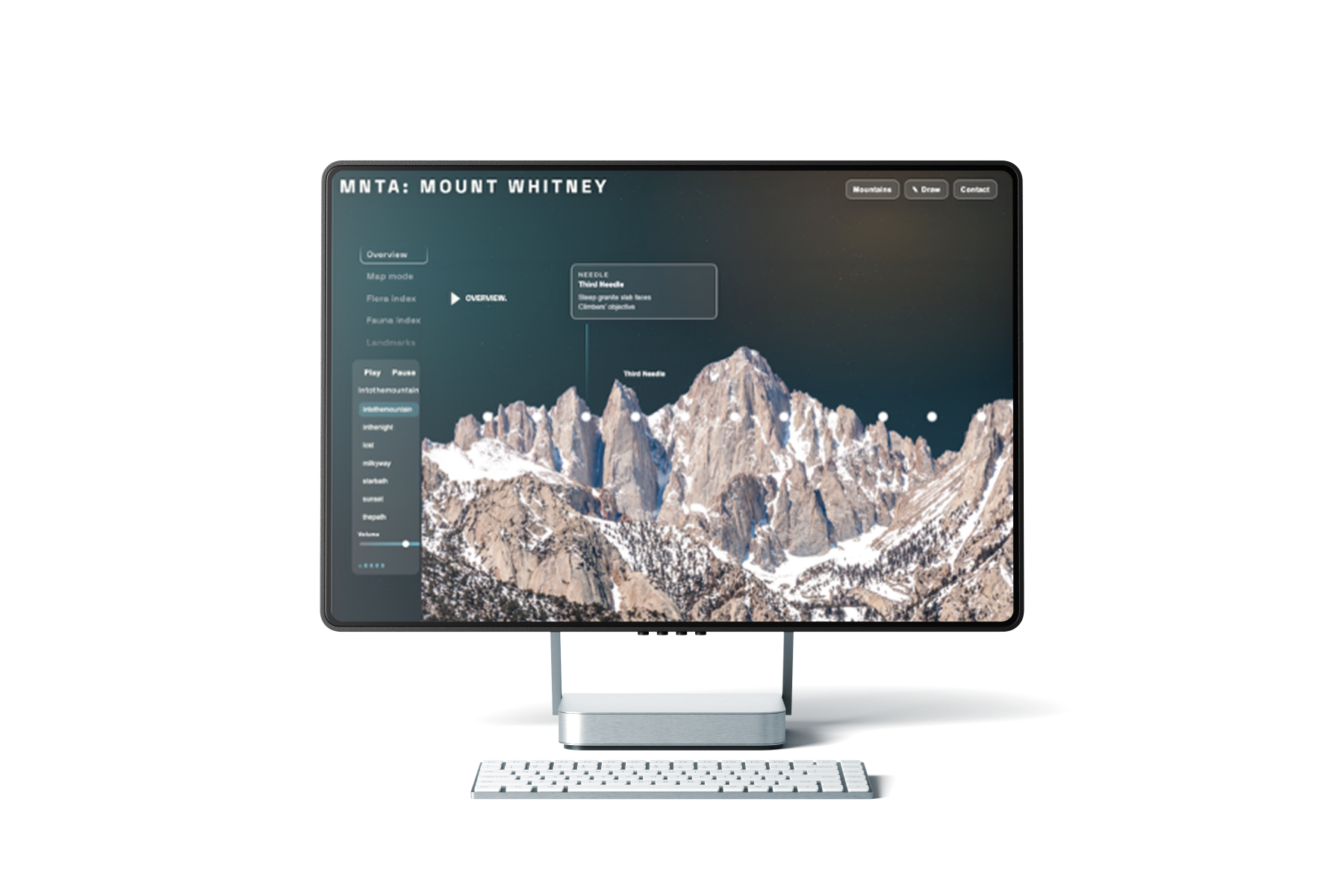
The digital platform lets users choose a mountain and move through it slowly. Instead of optimizing for speed, goals, or performance, the interface supports observation: vantage points, weather, flora, fauna, sound, and stillness.
Users can explore a mountain from different positions, hover across the landscape to identify natural details, listen to ambient field recordings, or send a selected mountain to someone else as a digital or printed postcard.
MNTA uses ecology callouts to make each mountain feel specific. Instead of describing the landscape in broad scenic language, the interface identifies plants, animals, weather patterns, and terrain details that help users understand what makes each environment different.
A live feature inside MNTA. Pick a peak, write a quiet line, and a postcard is delivered.
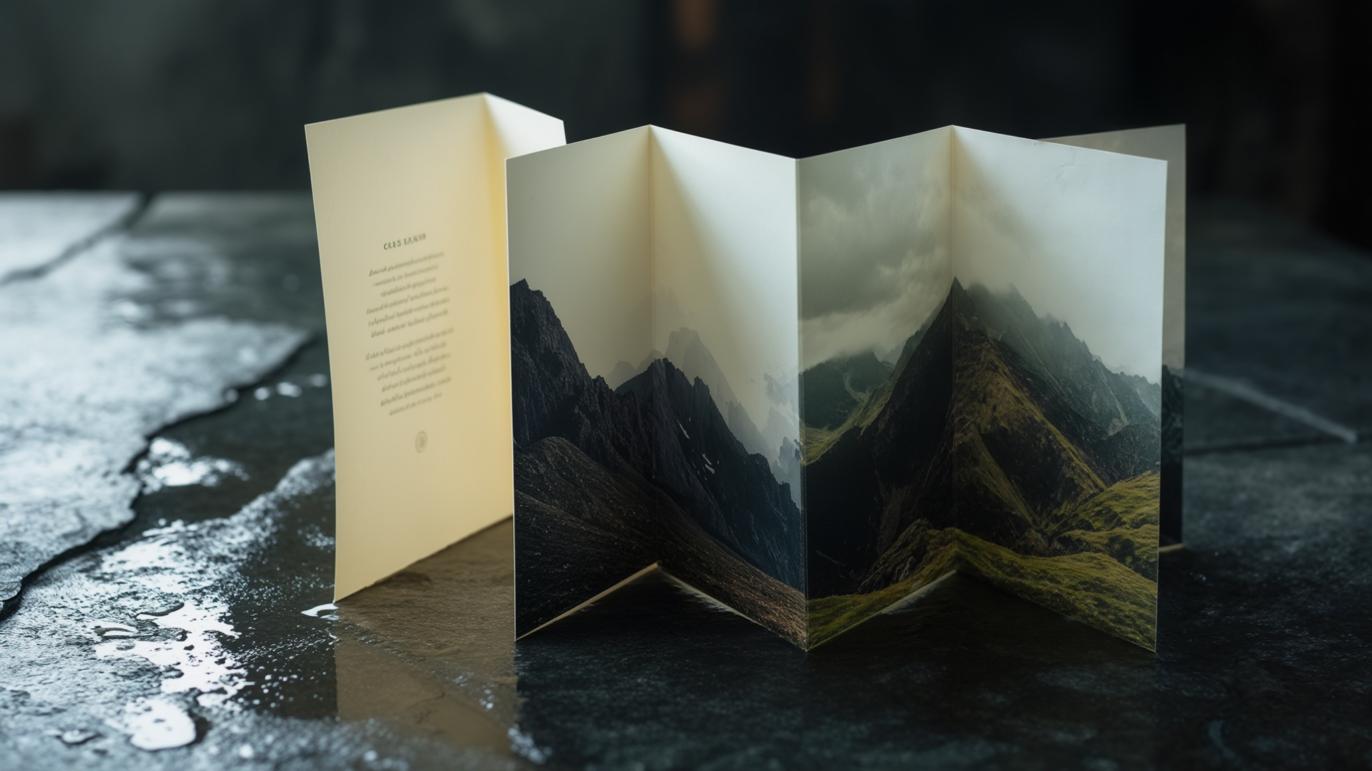
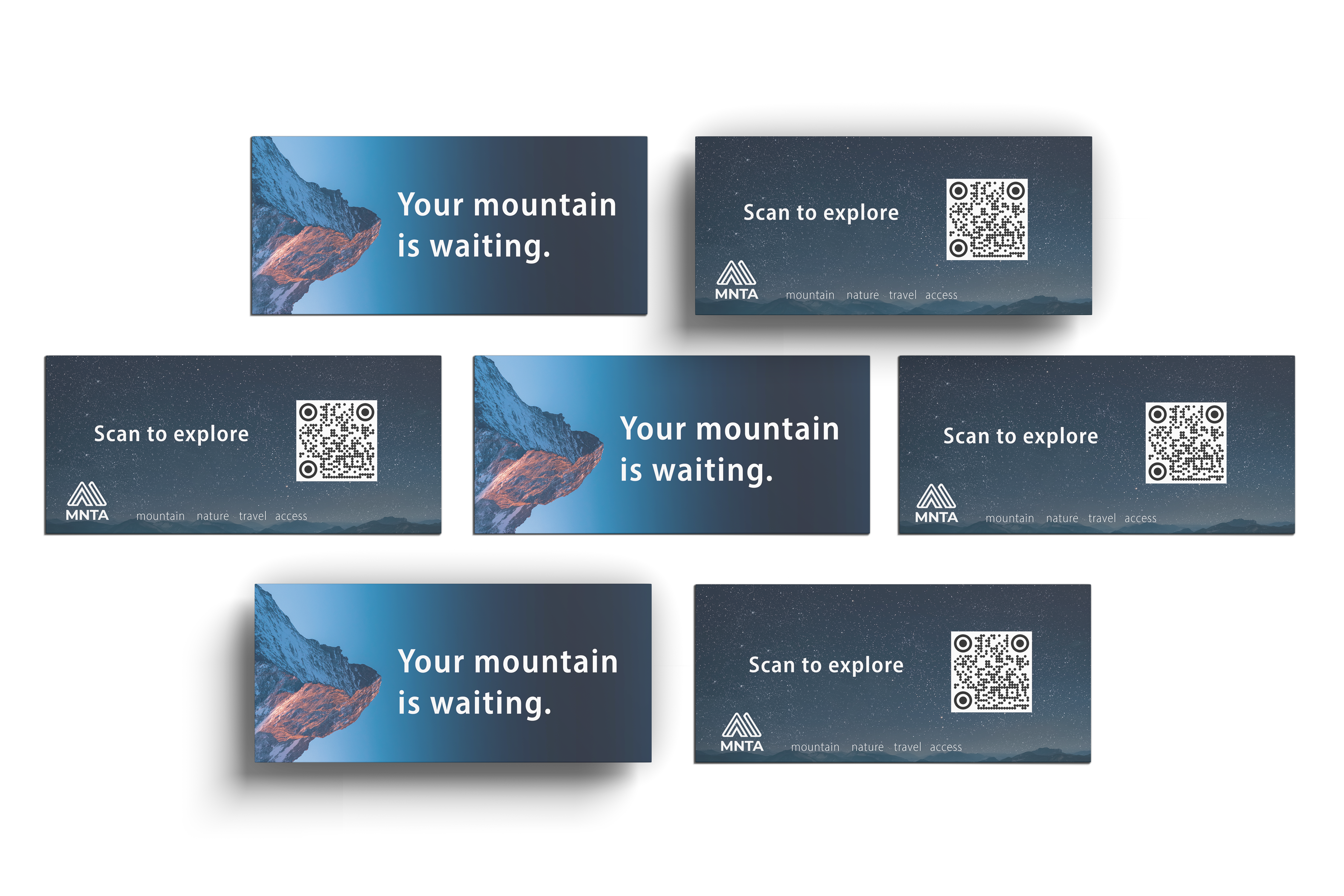
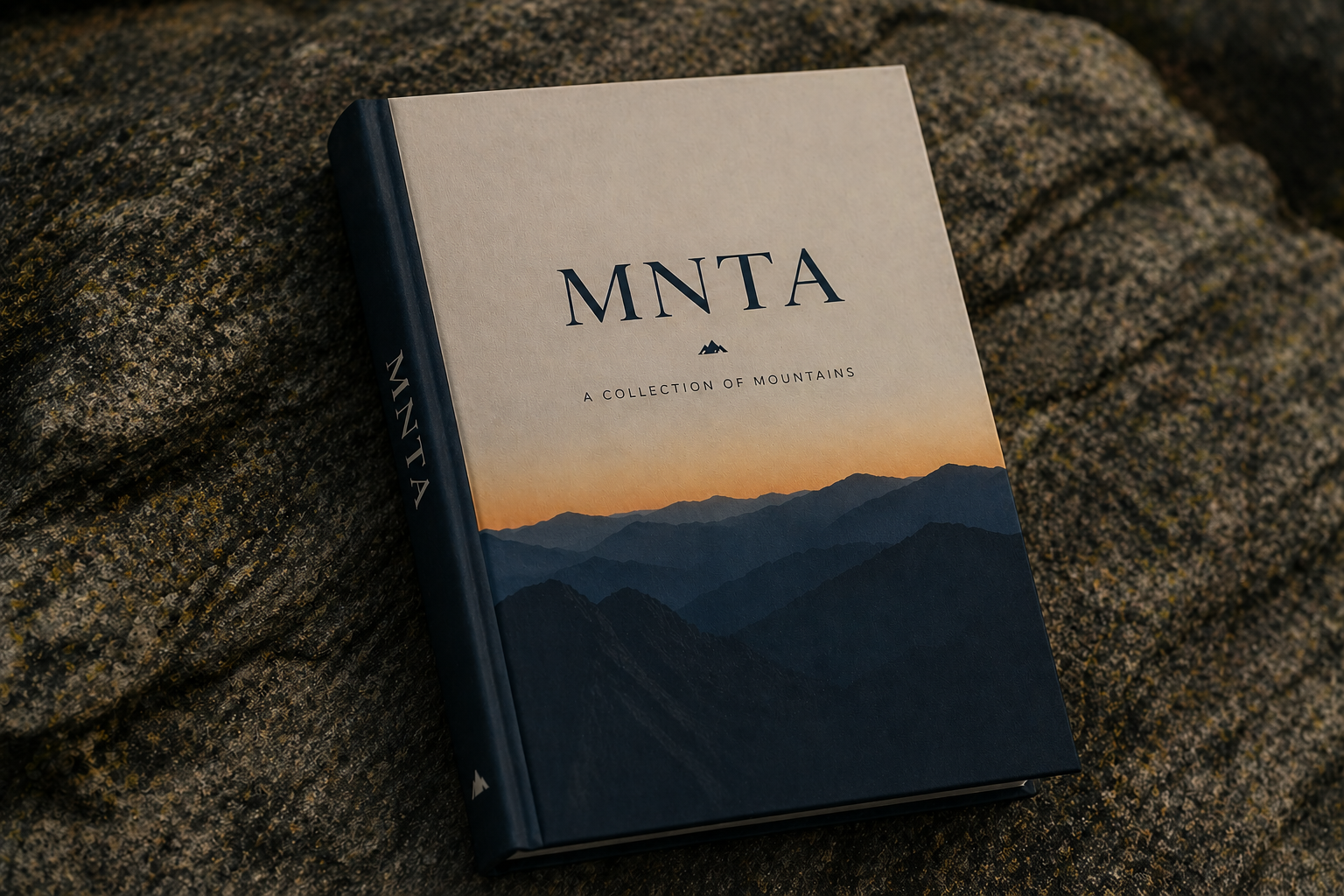
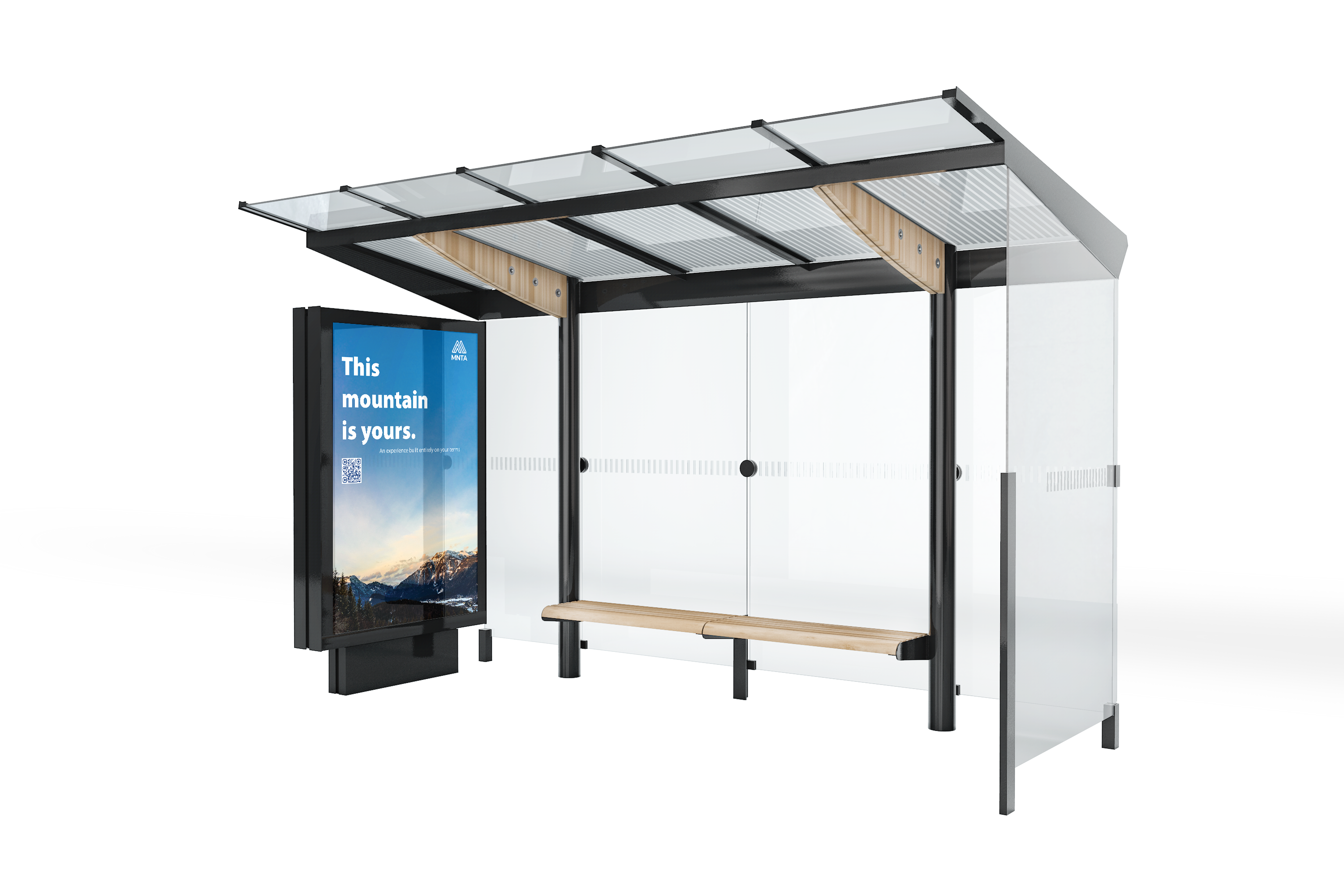
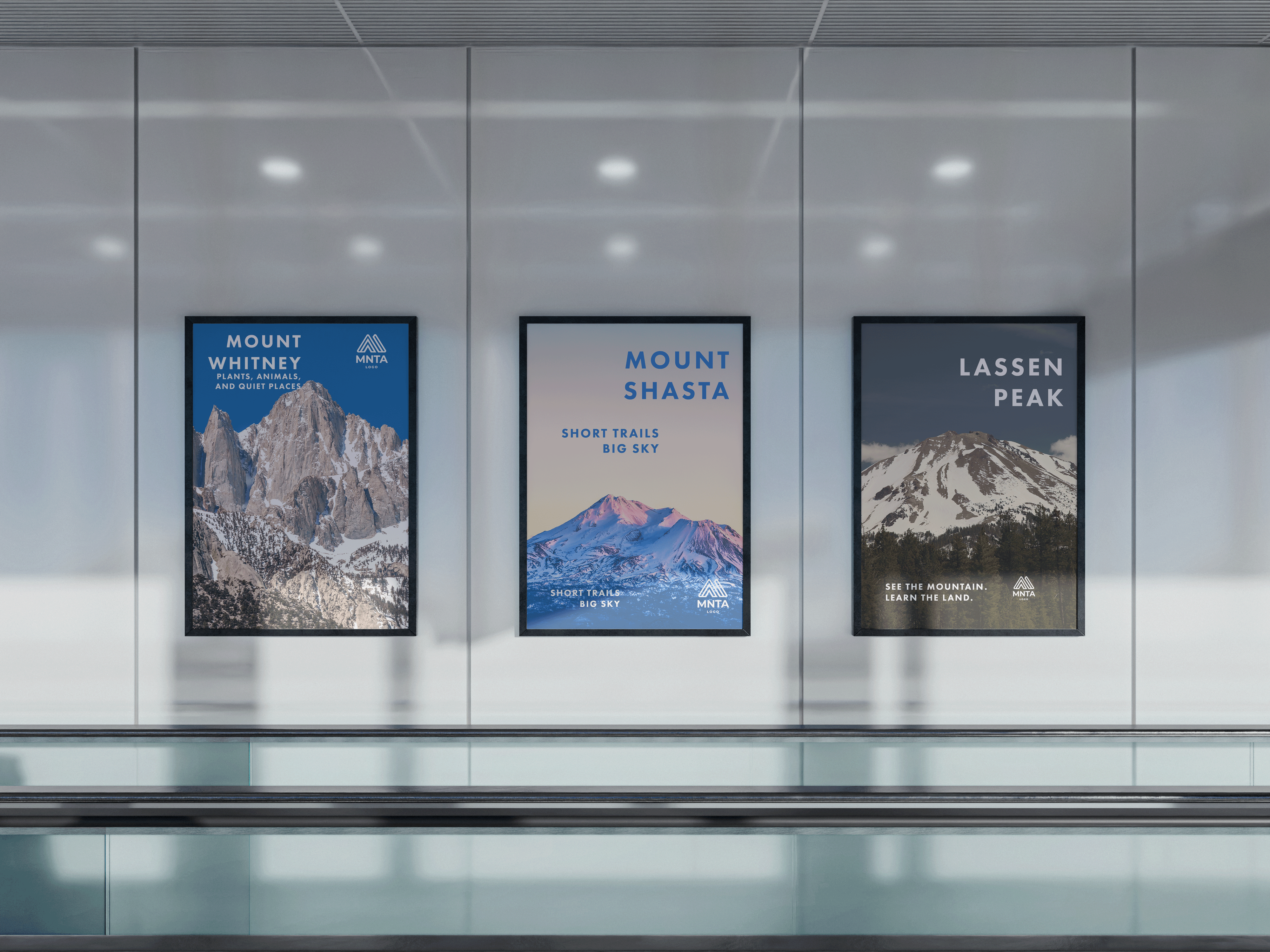
The print system gives MNTA a physical presence beyond the screen. Books, pamphlets, cards, postcards, and posters translate the platform into objects that can be held, mailed, displayed, or left behind in hospitals, libraries, galleries, and waiting spaces.
The materials are designed to feel calm and durable rather than promotional.
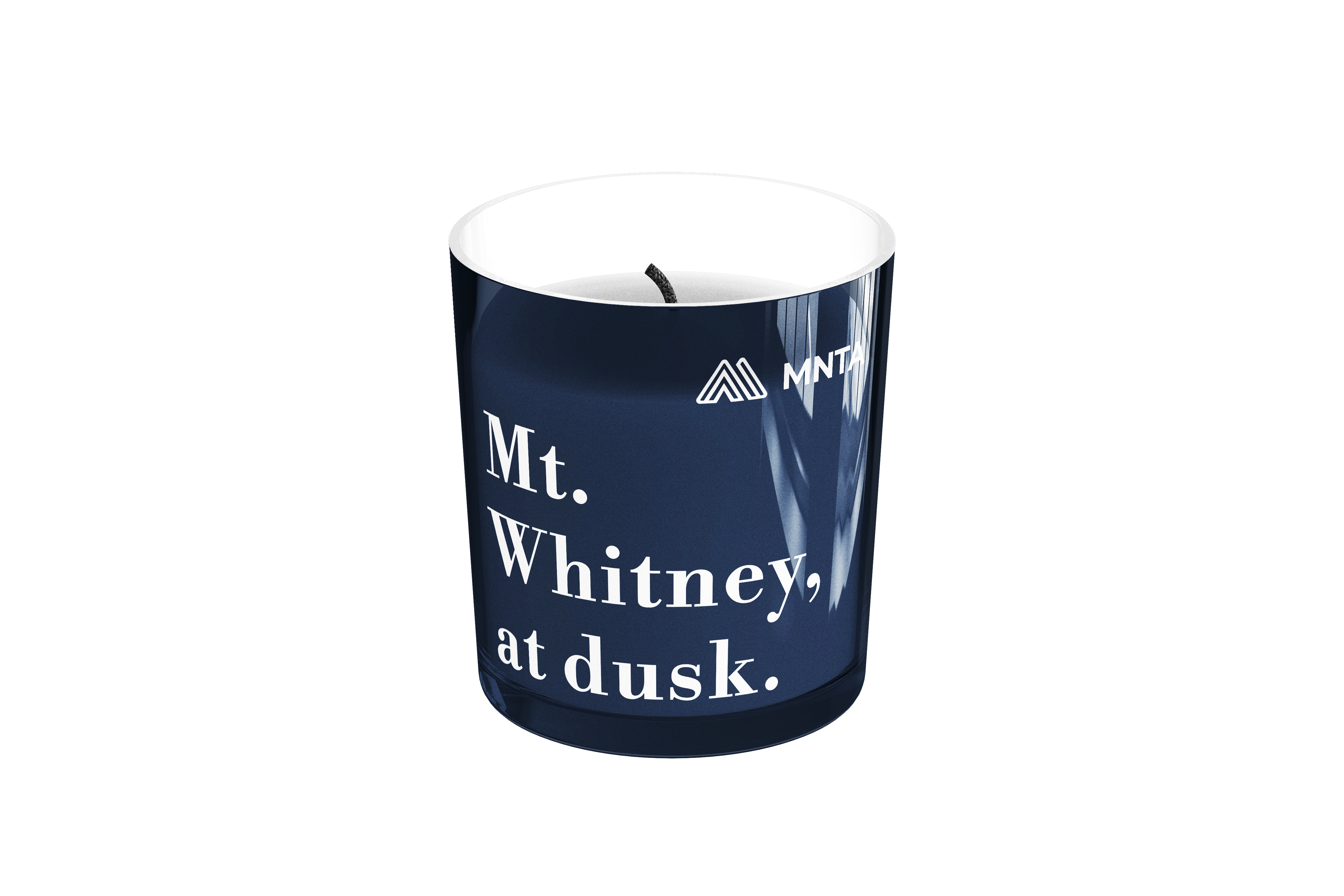
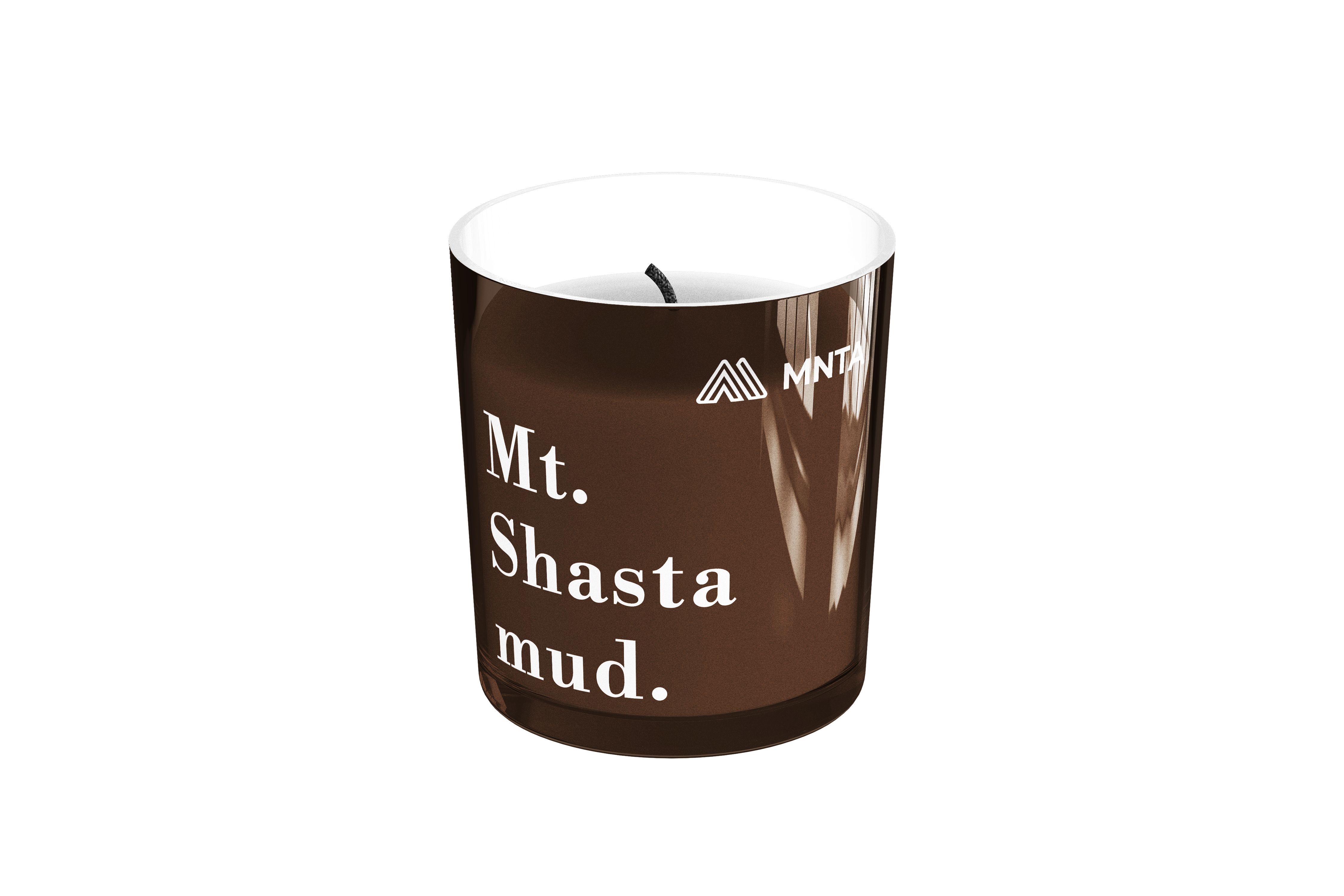
A candle, packaged like print. Each scent is sourced from a single place at a single hour — the literal needles, soils, and stone of one named ridge. The label reads like a chapter heading. The vessel sits dark on a shelf until lit.
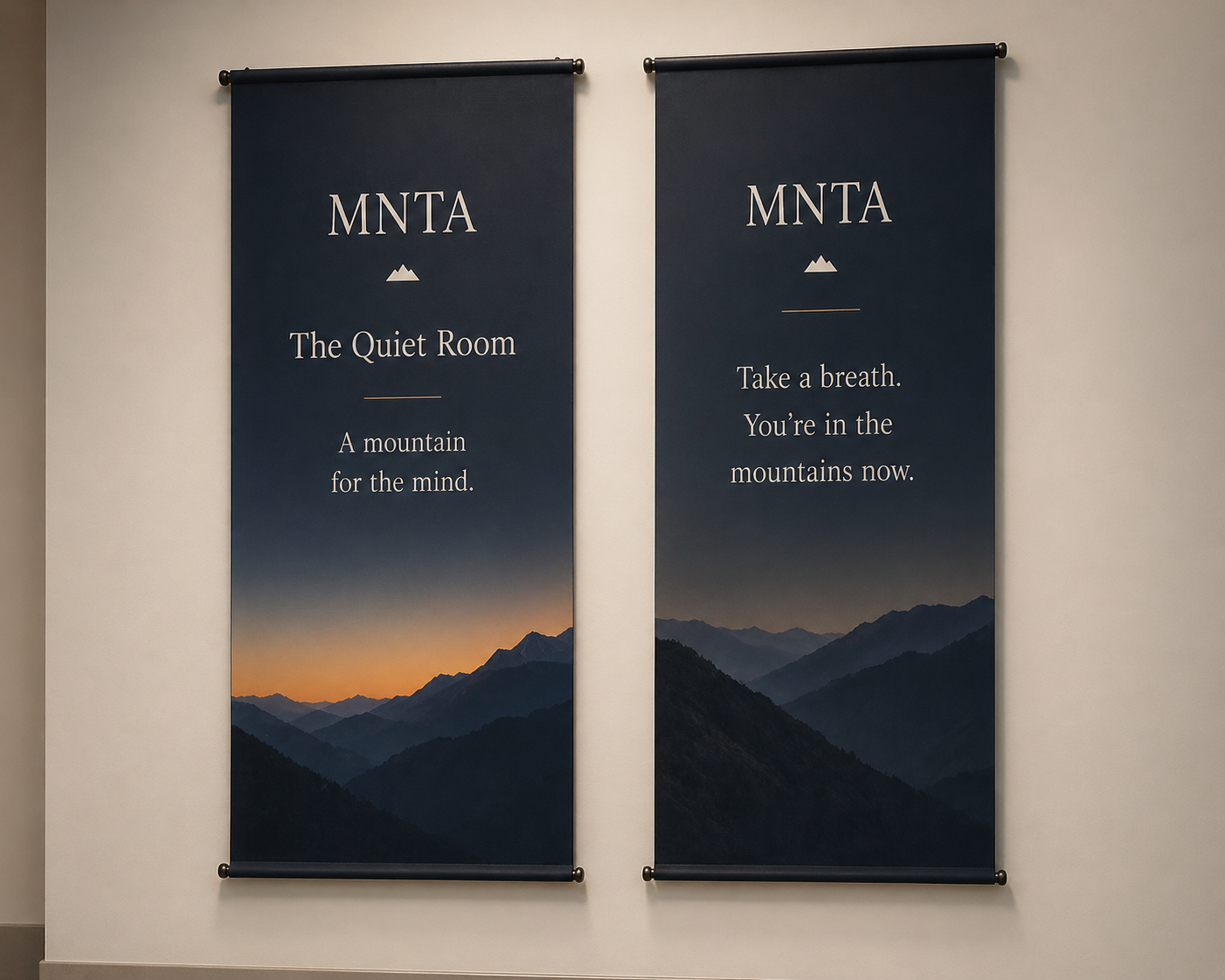
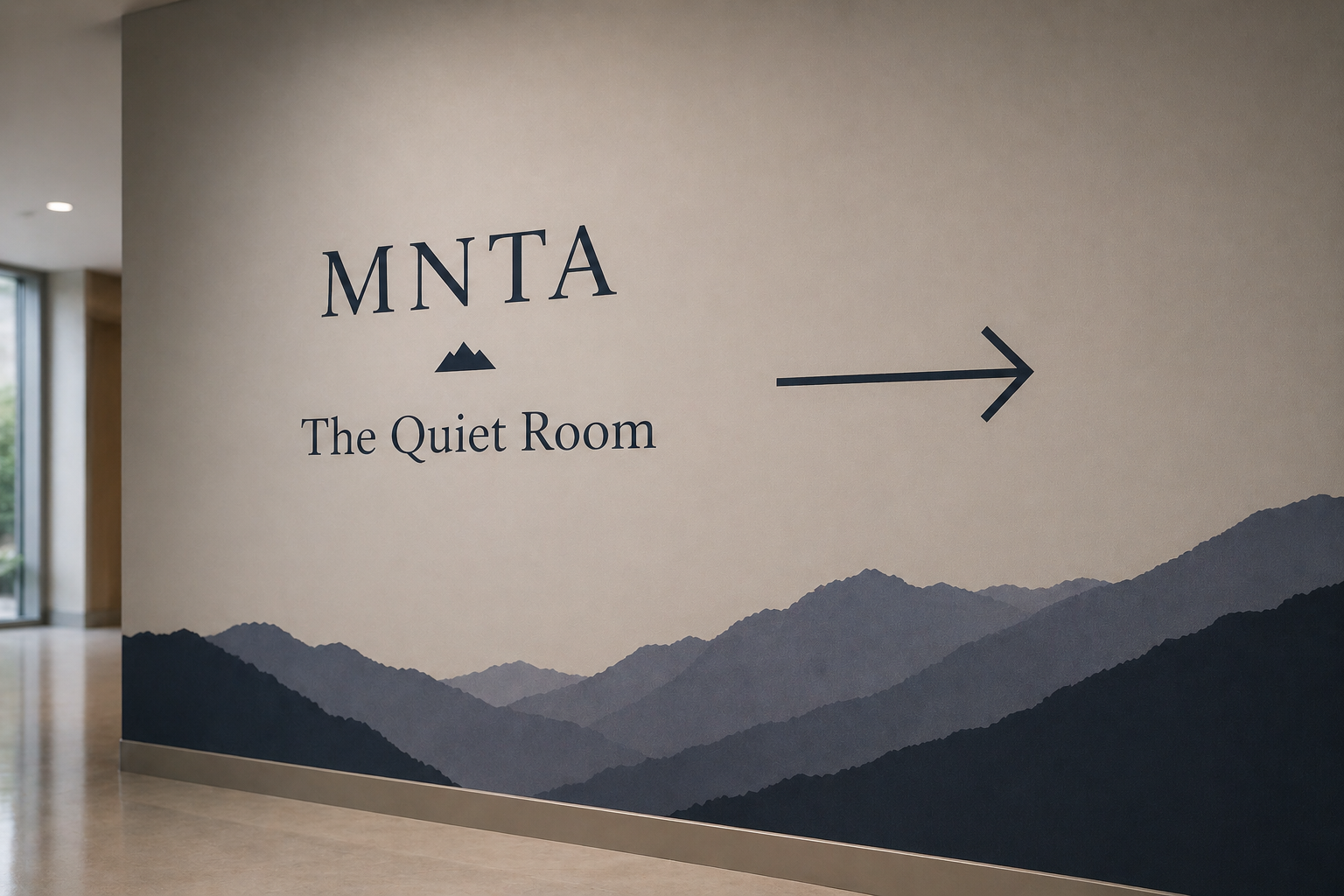
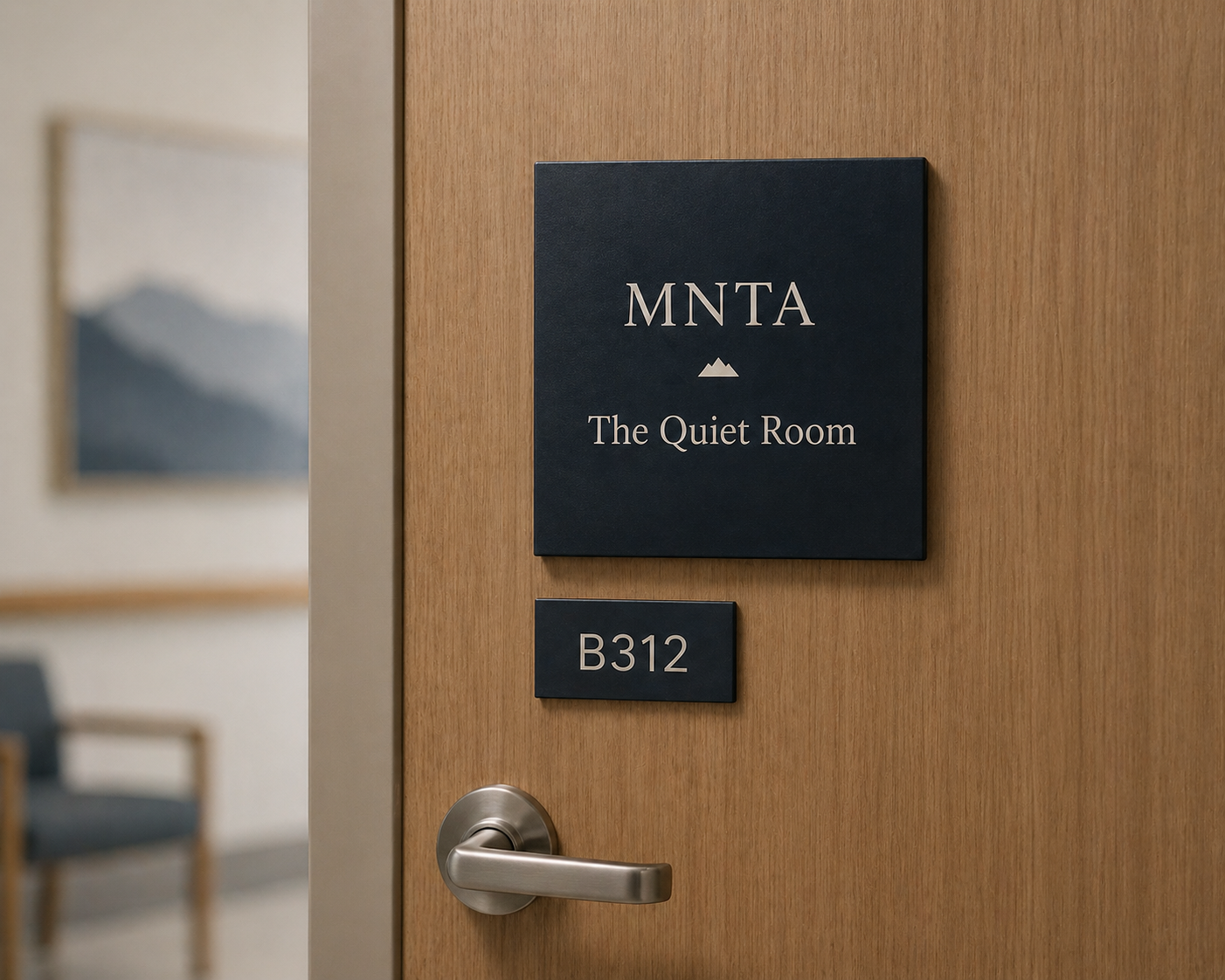
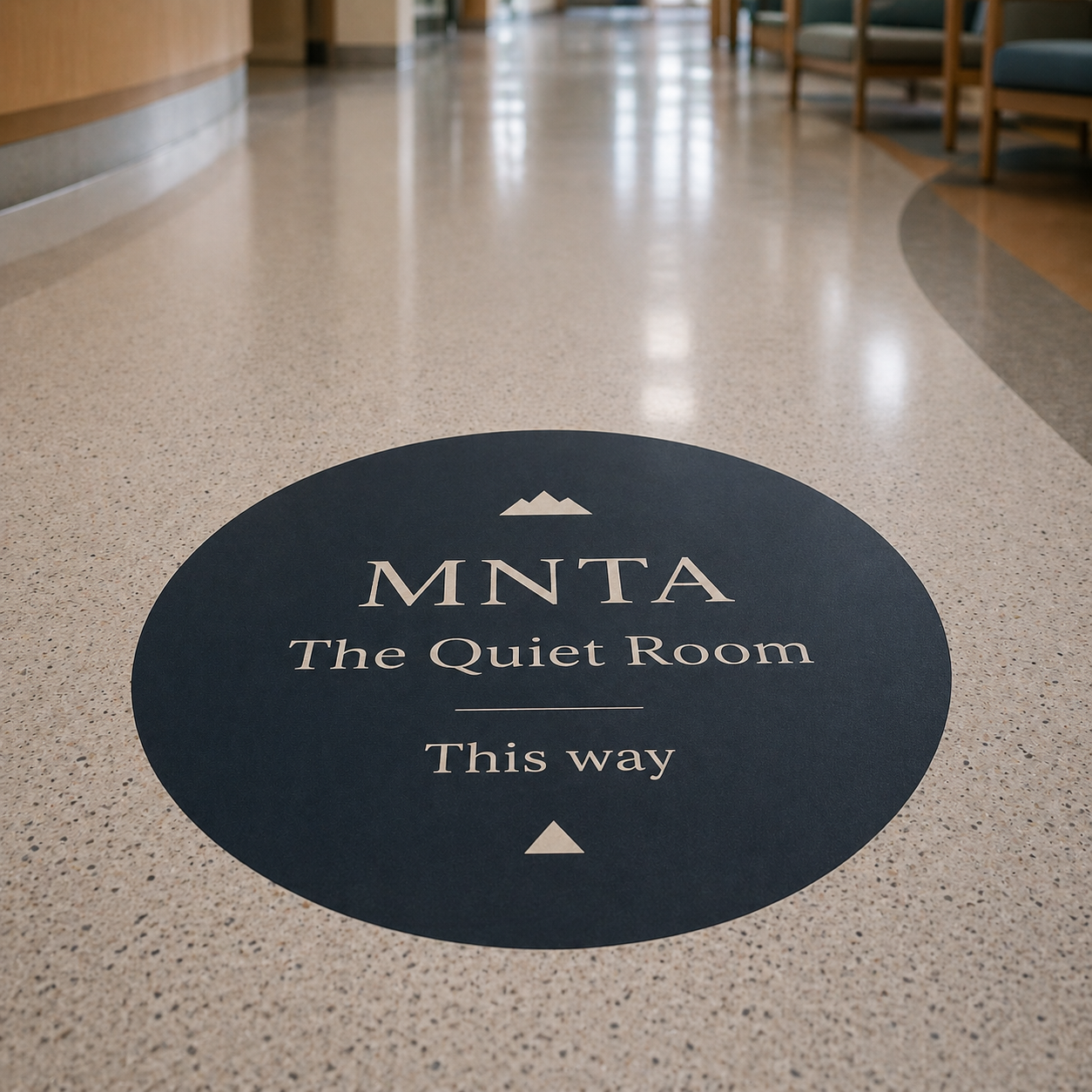
The spatial system brings MNTA into hospitals, hospice environments, memory-care wings, libraries, and galleries. Floor decals, door signs, wall banners, and vinyl graphics guide visitors toward the Quiet Room without making the experience feel clinical or over-explained.
The goal is to make the path feel calm, clear, and intentional.


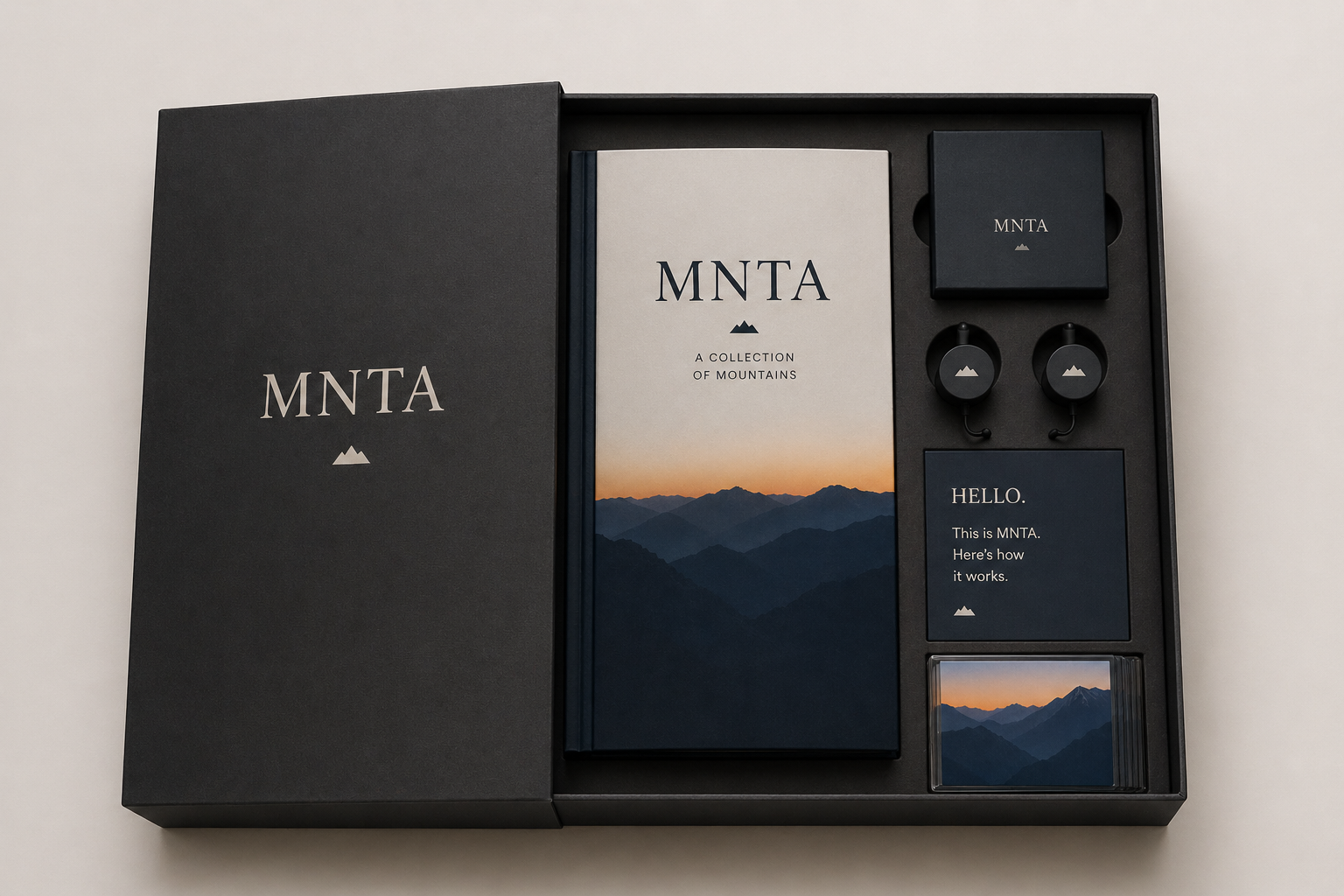
The partnership kit is a mailable system for hospitals and care environments. A single charcoal slipcase contains the printed book, tablet stand, headphone hooks, staff instruction card, and postcard stack.
The kit makes MNTA usable without requiring a team to understand the full brand first.
MNTA reframes access to nature as an experience system. It combines brand identity, interface design, print, and environmental installation to make mountain environments available to people whose bodies, locations, or circumstances keep them away from the trail.
It is less about reaching the summit and more about making the feeling of being there available.